Nobody reads warranty terms before buying. They read them the morning after something breaks, which is exactly the wrong time to discover what isn’t covered.
Here’s what actually matters, explained before you need it.
What a standard warranty actually covers
A manufacturer’s warranty covers defects in materials and workmanship. That’s a narrower promise than most people assume.
It means: the device failed because something inside it was made incorrectly or failed prematurely under normal use. A screen that develops dead pixels, a laptop that stops booting, a fan that fails, a port that stops responding.
It does not mean: the device stopped working. If it stopped working because it was dropped, submerged, exposed to voltage surges, or opened by someone unauthorised, the warranty typically doesn’t apply.
This distinction produces most warranty disputes. A phone with a cracked screen and a phone with a screen that developed lines by itself look similar to the owner and completely different to the manufacturer.
Common exclusions
Accidental damage. Drops, cracks, spills. This is the single largest category of failure and the one standard warranties universally exclude.
Liquid damage. Most devices contain liquid contact indicators, small stickers that change colour permanently on contact with moisture. Service centres check these first. Even devices with water resistance ratings frequently exclude liquid damage from warranty, on the grounds that resistance is tested under controlled conditions that real-world exposure doesn’t match.
Batteries. Frequently covered for a shorter period, or excluded as a consumable. Some manufacturers cover batteries only if capacity falls below a threshold, typically 80 percent, within the warranty period.
Cosmetic damage. Scratches and dents that don’t affect function.
Unauthorised repair. Opening the device or having it serviced by a third party voids coverage in most terms, though enforcement varies by jurisdiction.
Software issues. Operating system problems, malware, and user configuration are generally not hardware defects.
Consumer protection law may exceed the warranty
This is worth knowing because it’s frequently more favourable than the printed terms.
Many jurisdictions have statutory consumer protection requiring goods to be of satisfactory quality and fit for purpose for a reasonable period, independent of what the manufacturer’s warranty states. In parts of Europe, this creates a minimum two-year period regardless of a shorter warranty. Other countries have similar provisions with varying strength.
The practical implication: a manufacturer declining a claim based on their warranty terms hasn’t necessarily resolved the matter under local law. It’s worth knowing what protections apply where you live before accepting a refusal.
In markets where enforcement is weaker, the seller’s own reputation and policies matter more, which brings us to the next point.
Where you buy changes what you get
Authorised retailers provide devices with valid manufacturer warranties, proper documentation, and a clear path to service.
Grey market or parallel imports are genuine devices imported outside official channels. They’re often cheaper. The catch is that the manufacturer’s warranty may not be honoured in your country, since warranty coverage is frequently regional. You may be left with only the importer’s own guarantee, which varies from adequate to non-existent.
This matters especially in markets where a substantial share of electronics arrive through unofficial channels. The savings are real, and so is the risk. If you buy this way, understand that a fault may mean paying for repair regardless of the device’s age.
Refurbished devices vary enormously. Manufacturer-refurbished units typically come with a genuine warranty and are frequently excellent value. Third-party refurbished units depend entirely on the seller’s own guarantee.
Extended warranties: usually poor value, sometimes not
Retailer extended warranties are profitable for retailers, which tells you something about their expected payout.
Electronics failure follows a pattern: manufacturing defects appear early, within the standard warranty. Wear-related failures appear late, usually after extended coverage expires. The middle period, which extended warranties cover, is when devices are least likely to fail.
When extended coverage might make sense: when it includes accidental damage rather than only mechanical failure, this is a fundamentally different product and can be genuinely worthwhile for phones and laptops, which get dropped.
When the device is expensive and repair costs are disproportionate, high-end laptops with soldered components, where a single fault can mean replacing the entire mainboard. And when it’s inexpensive relative to the device and provides genuine convenience, such as on-site service for a desktop you can’t easily transport.
Check what your payment method already provides. Many credit cards extend manufacturer warranties automatically, and some include purchase protection against damage or theft for a period after purchase. People frequently pay for coverage they already have.
Documentation: boring but decisive
Warranty claims fail on paperwork more often than on technical merit.
Keep the receipt. Thermal paper receipts fade, sometimes within a year. Photograph them. Store the photograph somewhere retrievable.
Record the serial number separately from the device, which is particularly important if the device is stolen or won’t power on.
Keep the box if you can, at least during the warranty period. Some service processes require original packaging, and it’s also useful for resale.
Document faults when they appear. Photographs, videos of intermittent behaviour, dates and descriptions. An intermittent fault that doesn’t reproduce at the service centre is a common and frustrating scenario. Evidence helps.
Navigating a repair
Back up first. Assume any device sent for service will return with its storage wiped. Many service processes replace mainboards or reinstall the operating system as standard.
Remove personal data where possible. Sign out of accounts, remove SIM and memory cards, and turn off device-locking features that might complicate testing.
Get the fault documented in writing when you hand the device over. A written description of the reported problem protects you if the diagnosis later differs.
Ask for a written estimate before authorising paid work, and ask whether the diagnostic itself is chargeable if you decline the repair.
Ask about parts. Original manufacturer parts, compatible third-party parts, and refurbished parts differ in quality and price. For displays and batteries especially, this distinction is significant.
Independent repair: pros and cons
Independent repair shops are frequently faster and cheaper than official service, and for common repairs — screens, batteries, charging ports, often perfectly competent.
The considerations:
Using one typically voids the remaining manufacturer warranty. If the device is still covered, use official channels.
Part quality varies. A cheap replacement screen may have poorer colour, brightness, or touch response than the original. Ask what’s being fitted.
Some devices pair components to the mainboard, meaning a replaced part triggers warnings or turns off features even when the repair is correct. This is increasingly common on phones.
For an out-of-warranty device with a straightforward fault, independent repair is frequently the sensible choice. For anything under warranty or involving complex diagnosis, official service is safer.
Repairability as a buying criterion
This is worth considering before purchase, not after.
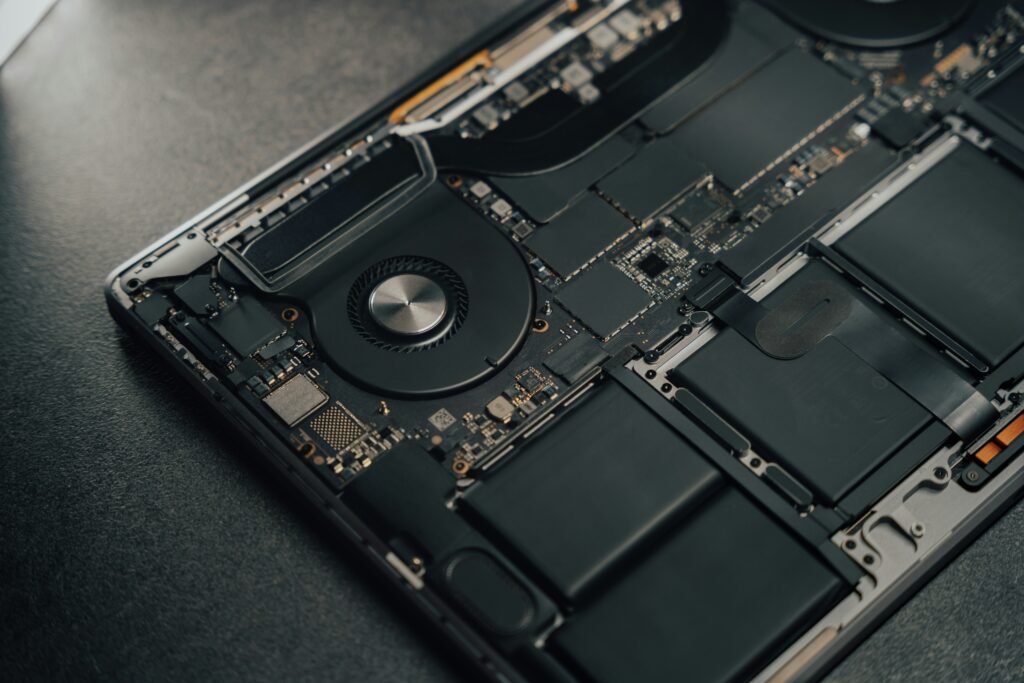
Some devices are designed for repair: accessible batteries, standard screws, available parts and documentation. Others are sealed with adhesive, use proprietary fasteners, and solder memory and storage directly to the board.
The practical consequence is that a repairable device with a failed battery costs a modest amount to fix. In contrast, a sealed device with the same fault may cost a substantial fraction of its original price, or be declared uneconomical to repair.
Repairability scores are published for some product categories, and independent teardown analyses are available for most popular devices. Ten minutes of research before buying can determine whether year four of ownership involves a simple repair or a replacement purchase.
The practical summary
Understand that standard warranties cover defects, not accidents. Check whether local consumer law gives you more than the printed terms.
Buy from authorised sellers unless you accept the warranty risk. Photograph your receipts. Consider accidental damage coverage rather than extended mechanical warranties. Back up before any repair. And weigh repairability when choosing what to buy, because the cheapest device to purchase is frequently the most expensive to keep working.