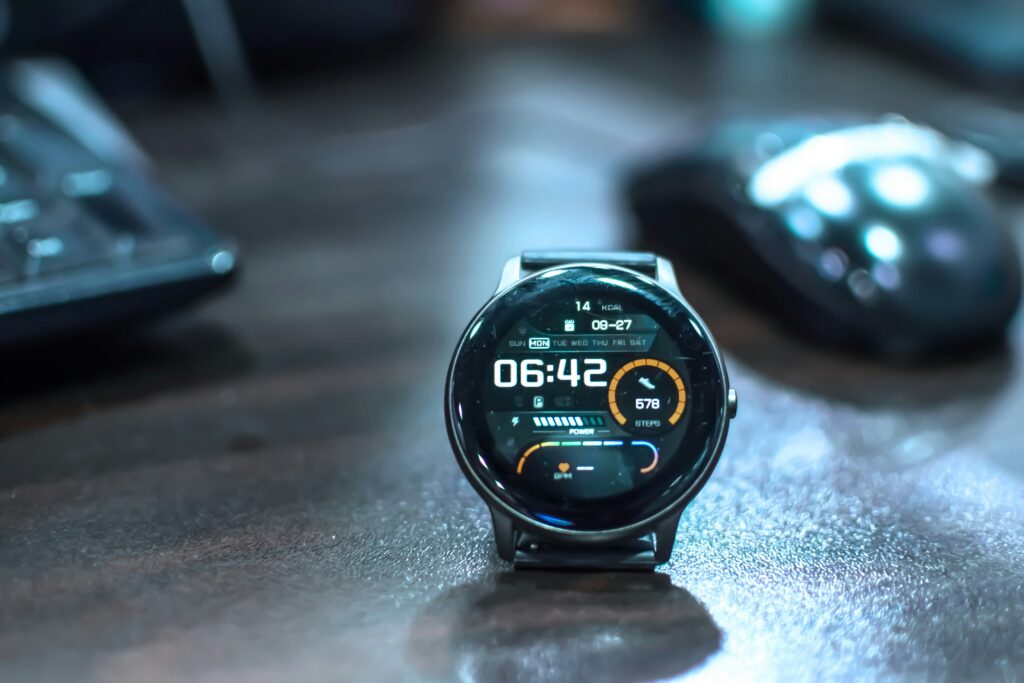
Smartwatches occupy an unusual position among gadgets. Most people who own one would be reluctant to give it up; most people who don’t own one struggle to articulate why they’d want one. And the marketing doesn’t help, because it advertises the features rather than the experience of wearing one.
So let’s talk about what these things really do, and how to choose one without buying capabilities you’ll never open.
What a smartwatch actually changes
The honest answer is that a smartwatch mostly changes your relationship with your phone.
Notifications arrive on your wrist. You glance, decide in half a second whether it needs attention, and either respond or ignore it. What disappears is the ritual of removing your phone from your pocket, unlocking it, checking, and then, this is the part that matters, staying on the phone for the next eleven minutes because something else caught your attention.
That’s the primary benefit for most owners, and it’s rarely the headline feature.
The second benefit is passive data. Steps, heart rate, sleep, workouts, collected without you doing anything. Whether that’s valuable depends entirely on whether you’ll act on it, which is worth being honest with yourself about before spending.
The compatibility question first
Before anything else: check what phone you have.
Apple Watch works only with iPhone. Not partially, not with reduced features; it simply will not function with an Android phone. This is the most common and most expensive mistake in this category.
Most other smartwatches work with both platforms, but frequently with reduced functionality on iOS. Replying to messages from the watch, in particular, is often restricted on iPhone due to platform limitations.
Determine this first. It eliminates most of the market immediately and saves considerable deliberation.
The categories worth understanding
Full smartwatches run a proper operating system, support third-party apps, handle notifications and replies, and typically last one to two days on a charge. This is the category most people mean when they say smartwatch.
Fitness watches prioritise training metrics, GPS accuracy, and battery life measured in weeks rather than days. Smart features are more limited, notifications, yes; apps and replies, often no. Ideal if health tracking is the actual goal.
Hybrid watches look like traditional analogue watches with subtle smart features underneath. Excellent battery, minimal functionality, best for people who want tracking without a screen on their wrist.
Fitness bands are the smaller, cheaper alternative. Basic tracking, notification display, remarkable battery life, low cost. Frequently the right recommendation for a first-time buyer who isn’t sure they’ll like the concept.
That last option deserves emphasis. Spending a modest amount to discover whether you’ll actually wear the thing daily is more sensible than committing to an expensive device and finding it in a drawer by March.
Health features: useful, approximate, not medical
Smartwatch health tracking is genuinely useful and also frequently overstated. Here’s a realistic assessment.
Step counting is reasonably accurate and is essentially a solved problem. Useful as a trend rather than an exact figure.
Heart rate from the wrist is accurate at rest and during steady activity. During high-intensity interval training, or any activity involving wrist movement or gripping, optical sensors struggle noticeably. Chest straps remain considerably more accurate for serious training.
Sleep tracking identifies when you were asleep with reasonable accuracy. Sleep stage identification (light, deep, REM) is a far softer estimate than the confident charts imply. Useful for spotting patterns in duration and consistency; not a substitute for a sleep study.
Blood oxygen measurement gives a rough indication. Not medical grade, and readings vary with fit, skin tone, movement, and temperature.
ECG functionality, on watches that offer it and where it’s regulatory-approved, is genuinely more substantial. It can detect signs of atrial fibrillation and has led to real diagnoses. Worth seeking out if you have cardiac concerns, though it should prompt a doctor’s visit rather than replace one.
The general principle: these devices are good at trends and poor at absolute precision. Someone whose resting heart rate climbs steadily over two weeks has learned something real. Someone comparing yesterday’s reading of 62 to today’s 65 has not.
Battery life and the charging reality
This is the most consequential daily consideration and the easiest to underestimate.
A watch requiring nightly charging cannot track your sleep. You’ll need to find a different charging window, during a shower, while at a desk, and building that habit takes deliberate effort. Many people stop tracking sleep as a result.
A watch lasting five to seven days changes the ownership experience considerably. You charge it when you remember; it doesn’t interrupt anything, and it’s essentially always available.
Be aware that stated battery figures assume conservative settings. Always-on display, frequent GPS use, high notification volume, and continuous heart rate monitoring all reduce real-world figures substantially, sometimes by half.
If you want sleep tracking, prioritise battery life above almost everything else.
Display types
AMOLED panels are vivid, deep-blacked, and excellent indoors. They consume more power, particularly with always-on display enabled.
Transflective LCD panels, used in many outdoor-focused fitness watches, use ambient light rather than fighting it, becoming more legible in bright sunlight. They look dull indoors but sip power, enabling those multi-week battery figures.
Always-on display is a genuine quality-of-life feature. Raising your wrist and waiting for the screen to wake is a small friction that repeats hundreds of times daily. It costs battery, and it’s usually worth it.
Build, fit, and the thing you’ll notice most
You’re going to wear this constantly, including in bed if you track sleep. Comfort outweighs specifications.
Size matters more than it seems. A large watch on a small wrist is uncomfortable during sleep and looks disproportionate. Most manufacturers offer two sizes; the smaller is frequently the better choice.
Weight compounds over a day. Aluminium and polymer cases are considerably lighter than stainless steel, and the difference is noticeable by evening.
Strap material determines whether you can wear it during exercise and sleep comfortably. Silicone is practical but can irritate during long wear. Woven nylon breathes better. Check whether the watch uses standard lugs, which allow inexpensive third-party straps, or a proprietary system that locks you into the manufacturer’s options.
Water resistance should be at minimum sufficient for showering. Look for swim-rated resistance if you swim; many watches survive water but aren’t designed for repeated submersion.
The subscription question
Some ecosystems place their more advanced health analytics behind a subscription. Basic metrics remain free; detailed insights, coaching, and long-term analysis require ongoing payment.
Check this before buying. A cheaper watch with a required subscription can cost more over three years than an expensive watch without one.
Choosing sensibly
If you have an iPhone and want the smoothest experience, the Apple Watch ecosystem is difficult to argue against, provided you accept daily charging.
If you have an Android phone, you have genuine choice across several ecosystems, and the deciding factor is usually battery life versus smart features.
If your goal is fitness tracking specifically, a fitness-oriented watch will serve you better than a general smartwatch, with better GPS, better battery, and more meaningful training metrics.
If you’re not certain you’ll wear it, start with an inexpensive fitness band. If it’s still on your wrist in three months, you’ve learned that upgrading is worthwhile. If it isn’t, you’ve saved a considerable amount.
One final thought
The best smartwatch is the one you actually wear. A device with superior specifications that sits charging in a drawer provides nothing. A modest device on your wrist every day provides everything these things are actually good for.
Optimise for comfort, battery, and compatibility. The features will take care of themselves.