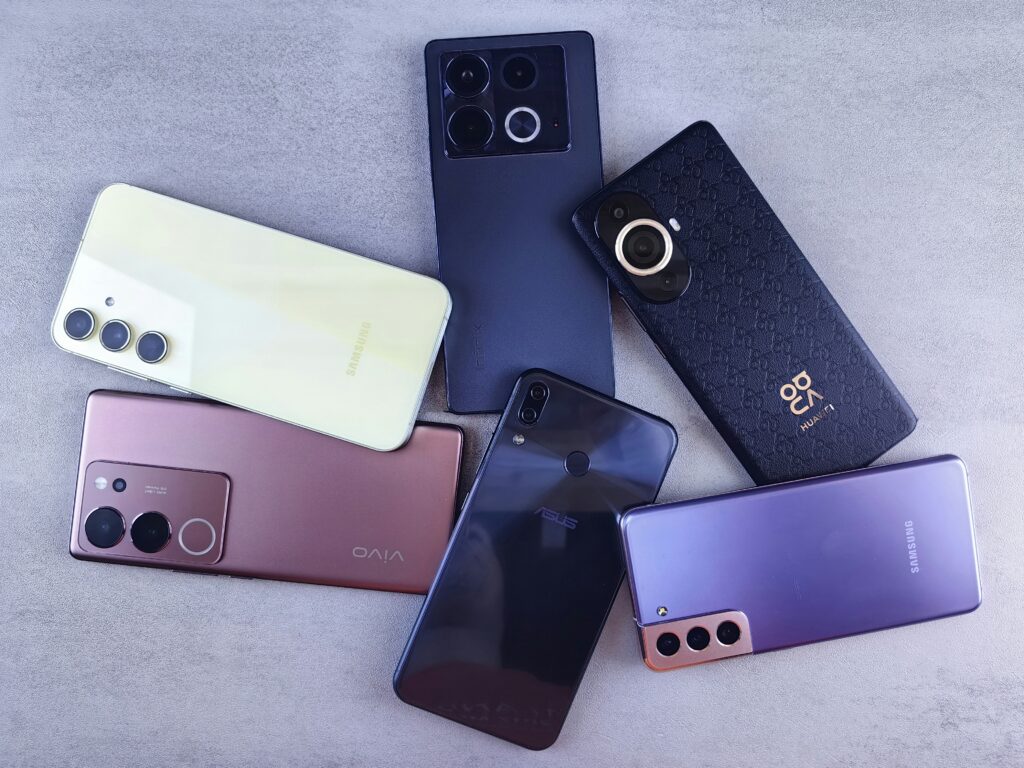
The budget phone market has quietly become the most interesting part of the industry. Flagships have plateaued; the difference between last year’s thousand-dollar phone and this year’s is genuinely hard to notice. Meanwhile, the two-hundred-dollar segment has improved so much that a phone at that price now does almost everything the average person needs.
Almost. The gap hasn’t closed entirely, and knowing where it remains is the whole skill of buying well here.
The trap of comparing spec sheets
Budget phones are sold on numbers because numbers are cheap to improve. A 108-megapixel camera sounds like it should outperform a 12-megapixel one. It usually doesn’t. A 5000mAh battery sounds like it should last longer than a 4500mAh one. It sometimes does, sometimes doesn’t.
The specifications that get printed prominently are the ones manufacturers can inflate inexpensively. The ones that actually determine whether you enjoy the phone, sensor size, software optimisation, update commitment, panel quality, are harder to advertise and easier to compromise on.
So the first rule of buying a budget phone is to distrust the numbers on the box and look at what people who’ve lived with it say after a month.
Software updates: the most important invisible feature
This is the single biggest differentiator in the budget segment, and it appears on no spec sheet.
A phone that receives two years of security patches and one Android version upgrade is a phone you’ll be nervous about using for banking in year three. A phone with four years of security support is a phone you can genuinely keep until it physically wears out.
The gap between manufacturers here is enormous. Some budget lines now promise four to six years of security updates, an extraordinary shift from a few years ago. Others still ship with a vague commitment and quietly abandon the device after eighteen months.
Before buying, search for the specific model’s stated update policy. If you can’t find one, treat that as an answer.
This matters more than the processor, more than the camera, more than the screen. A phone that stops receiving patches is a phone with an expiry date.
The processor question
Budget phones use chips from the lower tiers of the major manufacturers’ lineups, and there’s a meaningful distinction within that.
Look at the manufacturing process. A chip built on a 6nm or 4nm process will be significantly more power-efficient than one on 12nm, which translates directly into battery life and heat. This information is usually available even when not advertised.
Check the chip’s generation, not just its tier. A current-generation mid-range chip typically outperforms a two-generation-old upper-mid-range chip while using less power.
Be realistic about gaming. Budget chips handle casual games comfortably. Demanding 3D titles will run, but at reduced settings and with thermal throttling after twenty minutes. If gaming is a priority, this is the segment where paying more genuinely delivers.
For ordinary use, messaging, browsing, social media, video, navigation, almost any current budget chip is sufficient. The sluggishness people experience on cheap phones usually stems from insufficient RAM or slow storage, not the processor.
RAM and storage: where corners get cut
Six gigabytes of RAM is the practical minimum in 2026. Four gigabytes will run, but with aggressive app closure, you’ll switch back to a browser tab and find it reloading, or return to a messaging app and watch it start from scratch.
Ignore “virtual RAM” or “RAM expansion” features that borrow storage space. They help marginally and are largely a marketing response to a hardware limitation.
Storage type matters more than most buyers realise. UFS storage is dramatically faster than eMMC, and eMMC still appears in the lowest tiers. A phone with eMMC storage will feel slow when installing apps, capturing photos in burst, or opening large files, regardless of its processor.
Sixty-four gigabytes is not enough in 2026. The operating system takes a substantial share, and modern apps are large. One hundred and twenty-eight gigabytes is the sensible floor. Check whether the phone supports microSD expansion if you need more, though note that expandable storage has become rarer.
Displays: where budget phones improved most
This is genuinely good news. AMOLED panels have reached the budget segment, bringing proper blacks, better contrast, and lower power consumption on dark interfaces.
Panel type: AMOLED is preferable to LCD for most people. If a budget phone at your price offers AMOLED, that’s a meaningful advantage.
Refresh rate: 90 or 120Hz makes scrolling noticeably smoother. It’s the kind of improvement you don’t notice until you go back to 60Hz and everything feels stuttery. Most budget phones now offer at least 90Hz.
Brightness: this one gets overlooked and matters enormously in bright sunlight. Peak brightness figures can be misleading; look for sustained full-screen brightness rather than peak HDR figures measured on a small portion of the panel. A dim screen in daylight is a daily frustration.
Cameras: managing expectations correctly
Budget phone cameras have improved, but the improvement is uneven, and understanding where it isn’t will save disappointment.
In good light, budget cameras are genuinely fine. Daylight photos from a decent budget phone are perfectly shareable and, on a phone screen, hard to distinguish from flagship output.
In low light, the gap is enormous. Flagships use larger sensors, better stabilisation, and vastly more sophisticated computational processing. Budget phones produce noisy, smeared, or motion-blurred images in dim conditions.
Ignore the secondary cameras. Most budget phones list three or four rear cameras. Typically one is genuinely useful, and the rest are 2-megapixel macro and depth sensors that exist to increase the number in the listing. A phone with one good camera beats a phone with four mediocre ones.
Video is where the gap is widest. Budget phones frequently lack optical stabilisation, cap at 1080p, and struggle with exposure transitions. If video matters to you, this is worth paying to improve.
Battery and charging
Battery capacity has largely converged around 5000mAh across the segment, which is generous. The variable is efficiency; a phone with an efficient chip and a well-optimised display will noticeably outlast one with the same capacity and worse components.
Charging speed varies widely. Some budget phones support genuinely fast charging; others cap at 10 or 15 watts, meaning a full charge takes over two hours. Check whether a charger is included, since many manufacturers have stopped bundling them.
Be aware that very fast charging generates heat, which accelerates battery degradation over years. A phone that charges in twenty minutes will likely have a weaker battery in year three than one that charges in an hour. It’s a genuine trade-off, not a pure win.
What you’re actually giving up
To buy sensibly, be clear about what the budget tier genuinely lacks: water resistance ratings are often absent or minimal; wireless charging is rare; build materials are plastic rather than glass and metal (arguably an advantage for durability, a disadvantage for feel); speakers are frequently mono; haptics are buzzy rather than precise; low-light photography is compromised; and sustained gaming performance is limited.
None of these are deal breakers for most people. But knowing the list means you can check whether anything on it matters to you specifically.
A practical buying approach
Set your budget, then find every phone within it. Ignore the marketing entirely.
For each candidate, check: the update policy, the storage type, the RAM amount, the display panel and refresh rate, and reviews specifically discussing sustained performance after a few weeks.
Then read reviews from people who’ve used it for a month rather than launch-day impressions. Budget phones frequently review well initially and reveal their compromises over time: thermal throttling, storage slowdown, software bloat.
Finally, consider last year’s mid-range phone at a discount. A phone that launched at double your budget and has since fallen into it is frequently a better purchase than a new phone designed to a budget price point. The components are better, and the only real risk is a shorter remaining update window.
The bottom line
The budget segment in 2026 is good enough that most people would struggle to justify spending more. The phones are fast enough, the screens are good, the batteries last, and the cameras are fine in daylight.
Buy for update support first, storage and RAM second, display third. Treat the camera specifications as marketing and the low-light performance as a known limitation. And be honest about whether the things budget phones lack are things you’ll actually miss.